Summary
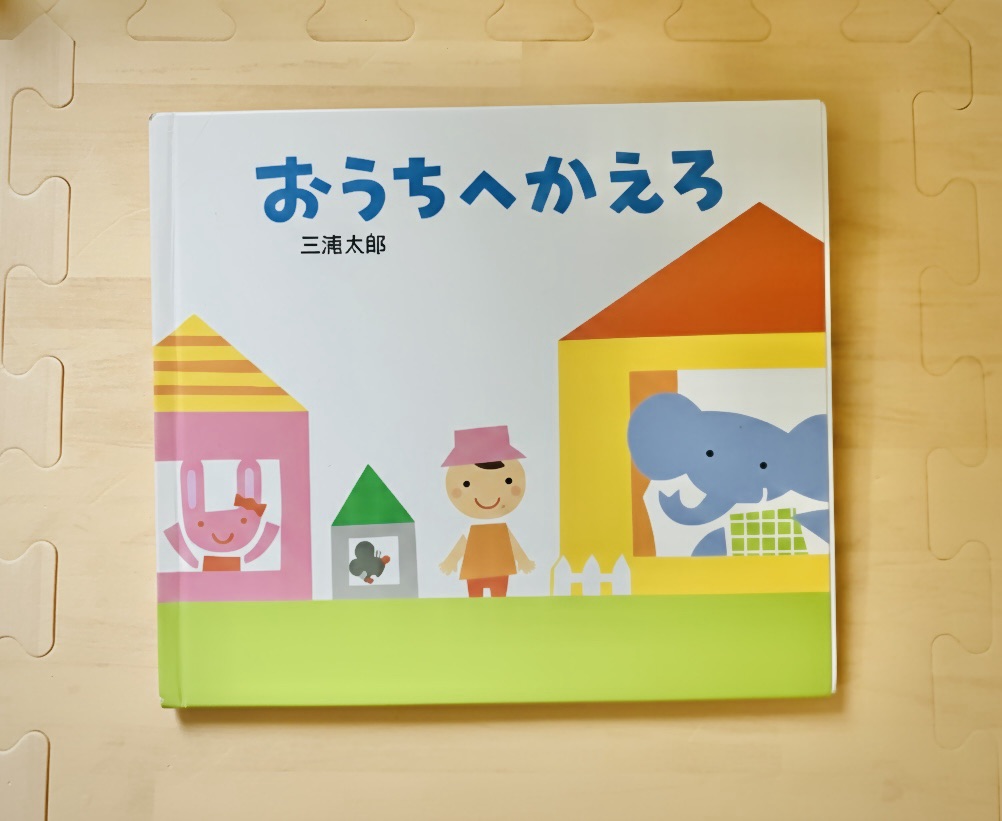
おうちへかえろ is a warm and beautifully designed picture book by 三浦太郎.
As evening falls, small creatures—an elephant, a mouse, a rabbit—return to their homes.
The story quietly builds until a human parent and child also head home, reinforcing the comforting idea that home is the safest and most loving place to be.
Why This Book Is Loved
A Story Wrapped in Reassurance
At dusk, each creature goes back to where family is waiting.
The final scene connects these journeys to a human parent and child, giving young readers a deep sense of security: home equals comfort and love.
Graphical Beauty and Modern Design
Taro Miura’s signature style—simple shapes and vivid colors—creates a visually striking experience.
The sky gradually shifts in tone from page to page, forming a subtle sunset gradient that captivates both children and adults.
A Soothing, Repetitive Rhythm
The gentle repetition of phrases like “Let’s go home” and “Bye-bye” creates a calm reading flow.
This predictable rhythm makes the book especially effective as part of a bedtime routine.
Reaffirming the Parent–Child Bond
Watching each animal return to loved ones visually communicates the feeling of being cared for.
The story often leaves parents wanting to hug their child after reading.
A Gentle Perspective on Small Lives
Beginning with creatures highlights that every living being has a place to belong.
This quiet message introduces children to the value and dignity of all life.
Cultural Notes
・In Japan, daily routines—especially returning home together—are often depicted as meaningful emotional moments in children’s media.
・The concept of uchi (home/inside) carries strong emotional significance, symbolizing safety and belonging.
・It reflects a Japanese sensitivity to the transition of time, using carefully designed colors to help children gently accept the end of the day as a natural and peaceful moment.
Book Information
Title (JP): おうちへかえろ
Title (EN): Ouchi e Kaero / Let’s Go Home
Author / Illustrator: Taro Miura
Recommended Age: 0–3 years
Publisher: Kaiseisha (Japan)