Why This Book Is Loved
Synesthetic Comfort of Sound and Shape
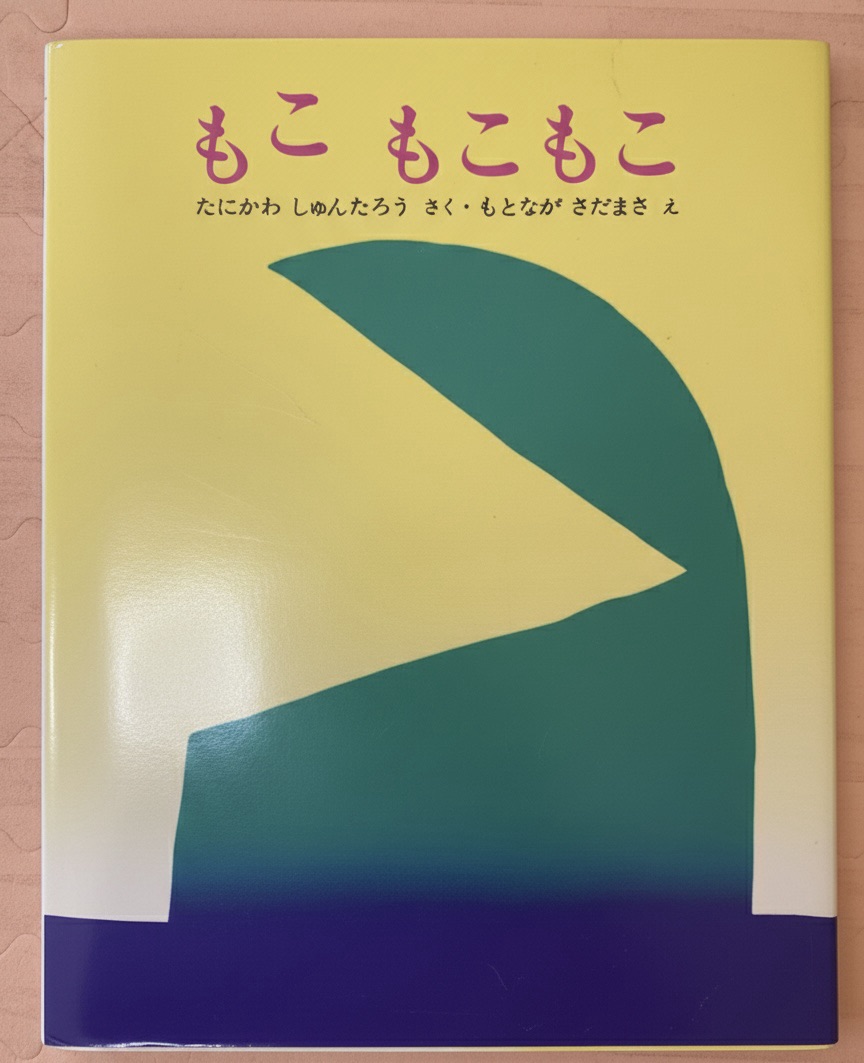
Minimal sounds such as “moko,” “nyoki,” and “pachin” are perfectly matched with changing abstract forms.
This combination speaks directly to a baby’s intuition, blending sound and visual sensation into a single, soothing experience.
A Dramatic Flow of Stillness and Movement
From an empty horizon, something slowly appears, grows, bursts, and disappears.
This dynamic sequence—almost like the birth and fading of a universe—keeps children deeply engaged and curious.
Abstract Expression That Frees Imagination
Because the shapes do not represent specific animals or objects, children and adults alike are free to interpret the images in their own way.
Each reading becomes an open-ended conversation: “Is it a mountain? A creature?”
Space for the Reader’s “Ma”
With so few words, the timing of page turns, pauses, and voice changes becomes essential.
This uniquely Japanese sense of ma (intentional silence and space) allows each reader to create their own rhythm and atmosphere.
Cultural Notes
The book reflects a Japanese aesthetic that values simplicity, space, and suggestion over clear explanation. The concept of ma—the meaningful pause or empty space—is deeply rooted in Japanese art, music, and storytelling.
Rather than teaching through instruction, the story encourages learning through feeling and intuition.
Book Information
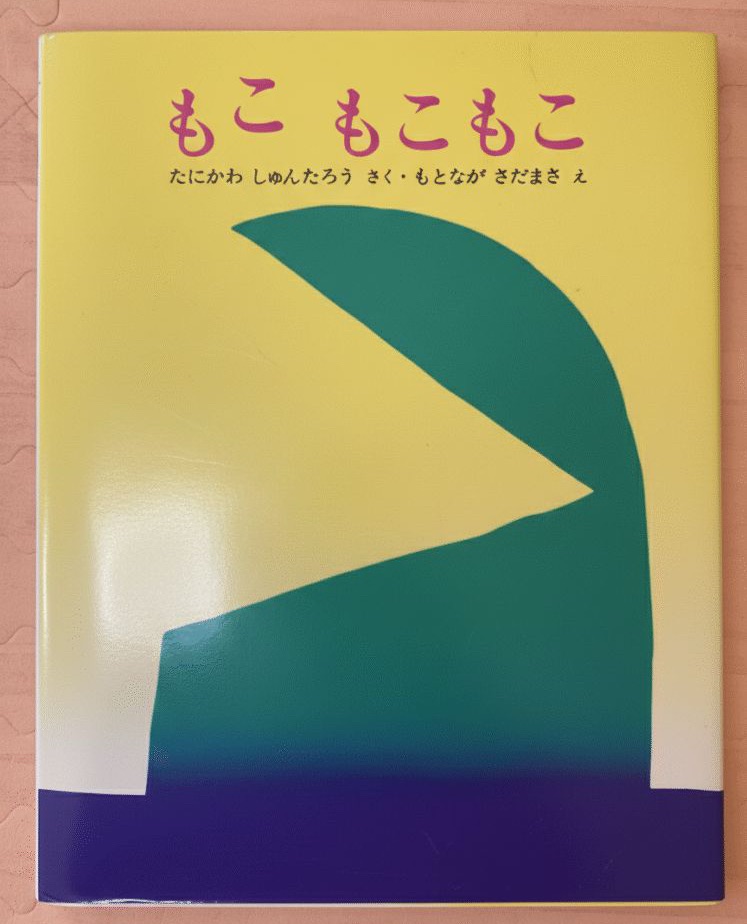
Title (JP): もこ もこもこ
Title (EN): Moko Moko Moko
Author: Shuntaro Tanikawa
Illustrator: Sadamasa Motonaga
Recommended Age: 0–2 years
First Published: 1977
Publisher: Bunken Publishing